
introduction
For the complete symptom index, see the pregnancy symptoms guide.
For related symptom explainers and safe next-step guidance, browse the Pregnancy Health hub.
Itchy nipples during pregnancy are one of the least talked about and most maddening early symptoms. Some people notice it before they even take a test; others get it in the second trimester when the skin over the breast is stretching fastest. Either way it is common, it is usually harmless, and it almost always responds to simple changes.
Your breasts can grow one to two cup sizes during pregnancy. Skin stretches, hormones surge, blood flow doubles, milk ducts develop and the areola darkens and enlarges — a lot of change for one small patch of very sensitive skin. Below are the nine causes worth knowing, the relief that is safe in pregnancy, and the specific kinds of itching that need a phone call rather than a moisturiser.
Want to know exactly which week you are in? Try our free pregnancy due date calculator.
Why Are My Nipples So Itchy in Pregnancy?
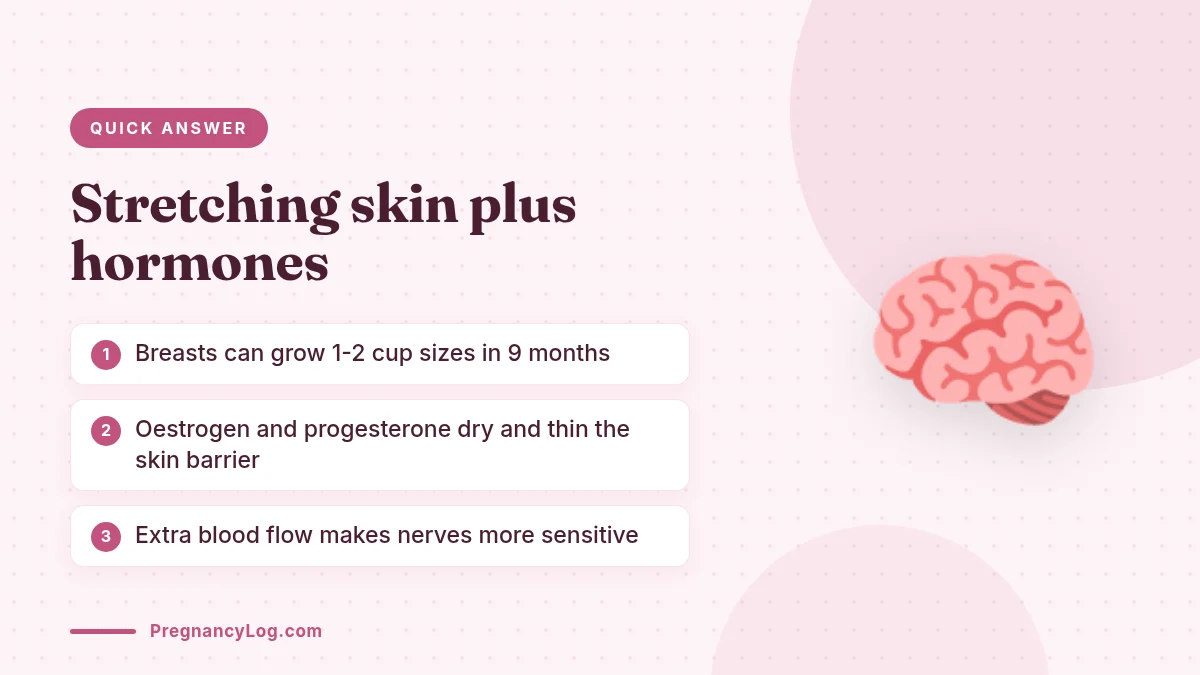
Three things happen at once. First, mechanical stretching: breast tissue and milk ducts expand from the first weeks, and skin that is stretching quickly itches, exactly as it does over a growing bump. Second, hormones: oestrogen and progesterone change how much water and oil your skin holds, so the barrier dries out and gets irritated more easily. Third, blood flow: breast circulation increases dramatically, which makes the area warmer, more sensitive and more reactive to friction from bras and clothing.
Add a hot shower, a new laundry detergent and an underwired bra that no longer fits, and the itch can go from background noise to unbearable. The American College of Obstetricians and Gynecologists lists generalised itching as one of the normal skin changes of pregnancy — but also stresses that some patterns of itching need investigating, which we cover below.
Nipple itching alone is not a reliable pregnancy sign, and it is not a sign of anything wrong with your milk supply later. It is simply skin doing a lot of work in a short time.
9 Causes of Itchy Nipples During Pregnancy
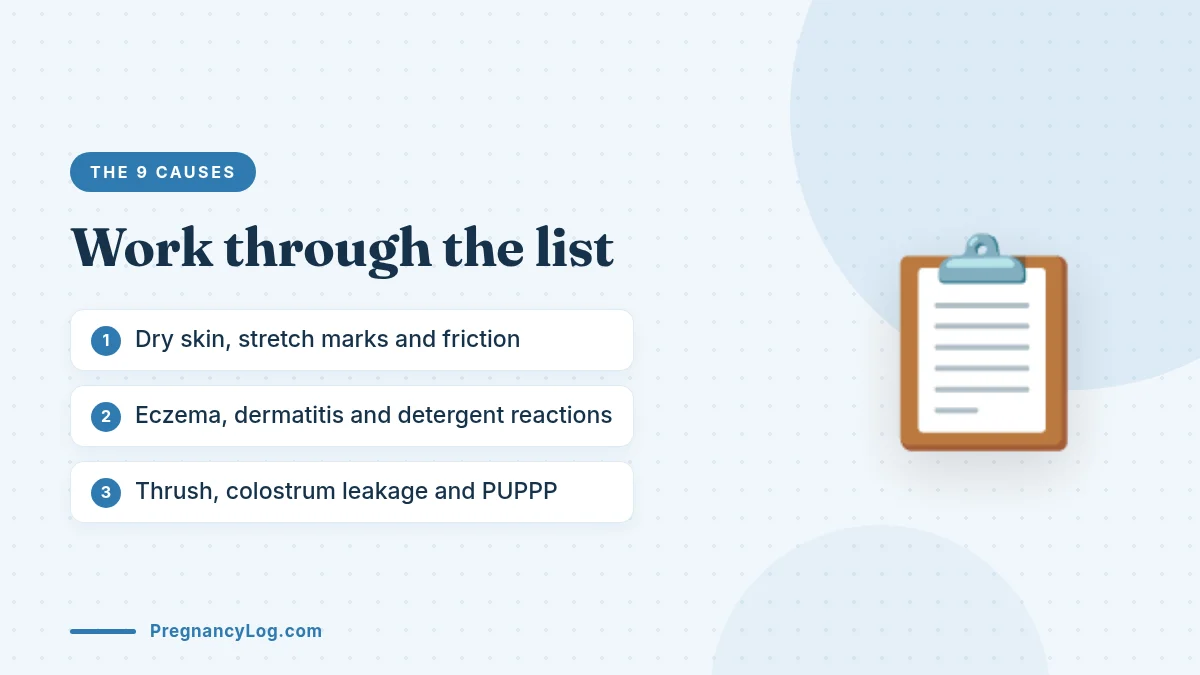
1. Dry, stretching skin
The most common cause by far. The skin over the breast and areola is thinner than skin elsewhere, so it dries out and itches sooner. Stretch marks often appear on the breasts before the belly.
2. Hormonal skin changes
Pregnancy hormones reduce skin oil and change pigmentation. Areolas darken and enlarge, and the small Montgomery glands on the areola become raised and more active — normal, but often itchy.
3. Friction from bras and clothing
A bra that fitted at six weeks may be digging in by sixteen. Seams, lace, underwires and synthetic fabrics rub sensitive skin, and sweat trapped underneath makes it worse.
4. Contact dermatitis
New laundry detergent, fabric softener, shower gel, nipple cream or even a heavily fragranced body lotion can cause a red, itchy, sometimes flaky reaction. Pregnancy makes skin more reactive to products you have used for years.
5. Eczema or nipple eczema
Existing atopic eczema often flares in pregnancy, and the nipple is a classic site. It looks dry, scaly or weepy and itches intensely. This responds to emollients and, if needed, a mild topical steroid your doctor approves.
6. Thrush (candida)
Yeast loves warm, damp skin, and pregnancy raises the risk. Nipple thrush causes shiny, flaky, intensely itchy or burning skin, sometimes with white patches. It usually needs an antifungal cream — see NHS guidance on thrush and ask before self-treating in pregnancy.
7. Leaking colostrum
From roughly the second trimester onwards some people leak small amounts of colostrum. Dried colostrum on the nipple is sticky and irritating and can trigger itching or cracking.
8. PUPPP and other pregnancy rashes
Polymorphic eruption of pregnancy (PUPPP/PEP) usually starts on the abdomen in the third trimester but can spread to the breasts as intensely itchy red bumps or plaques. It is harmless to the baby but often needs prescribed treatment for comfort.
9. Intrahepatic cholestasis of pregnancy (ICP)
The one cause you must not miss. ICP is a liver condition of late pregnancy that causes relentless itching — classically palms and soles, often worse at night, usually with no rash. It raises the risk of stillbirth and needs blood tests, so any widespread or night-dominant itching should be reported the same day. Read the NHS page on itching and intrahepatic cholestasis.
Other skin changes often turn up at the same time. If you have noticed new growths in skin folds, our guide to skin tags during pregnancy explains what is normal.
How to Relieve Itchy Nipples Safely in Pregnancy
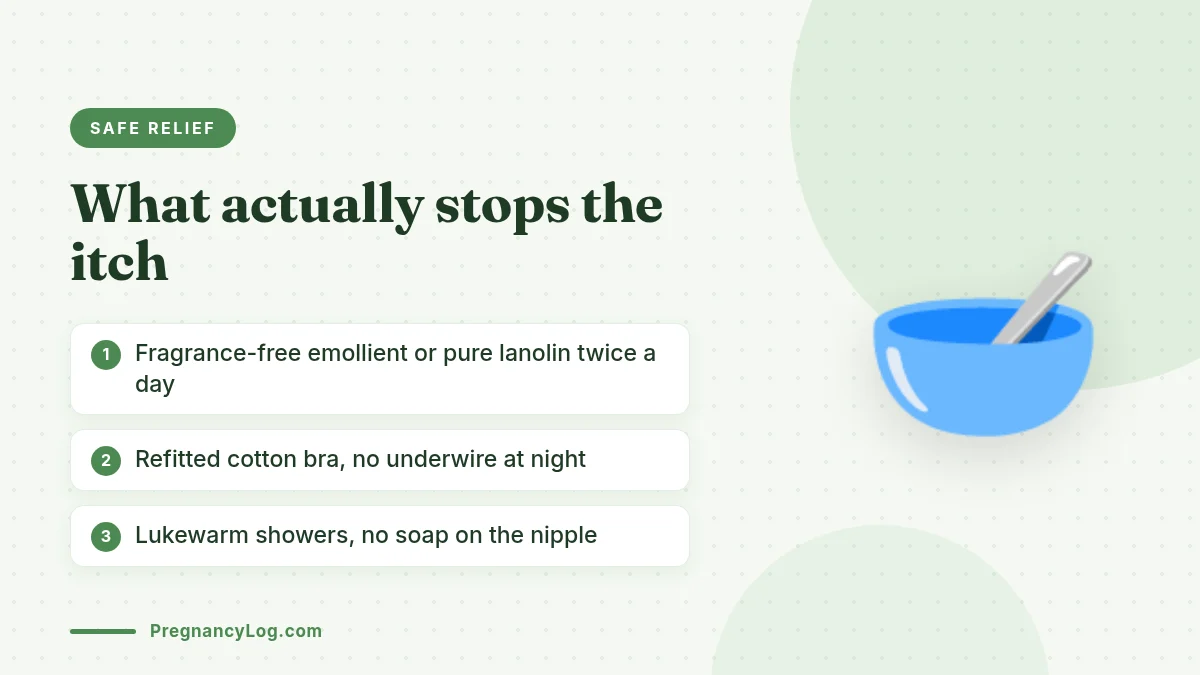
Do this first it fixes most cases within a week:
- Moisturise twice daily with a plain, fragrance-free emollient, or pure lanolin (the same product used for breastfeeding). Apply after showering while skin is still slightly damp.
- Get refitted for a bra. Soft-cup cotton maternity bras with wide bands and no underwire in the itchy phase; a light sleep bra if night-time friction is the problem.
- Shower lukewarm, not hot, and keep soap, shower gel and scrubs off the nipple and areola. Water alone is enough there.
- Switch to a non-biological, fragrance-free detergent and stop fabric softener on bras and tops.
- Use breast pads if you are leaking, change them as soon as they are damp, and rinse dried colostrum off with warm water.
- Cool the itch with a cold compress or a chilled (not frozen) gel pack over a thin cloth for 10 minutes.
- Keep nails short and press rather than scratch — broken skin on the nipple invites infection.
Ingredients and products to avoid or ask about: retinoids and high-strength salicylic acid (avoid in pregnancy), strong steroid creams without medical advice, medicated anti-itch creams containing antihistamines, essential-oil blends and anything heavily perfumed. Oral antihistamines are sometimes used in pregnancy, but only on your clinician’s advice. Vitamin E oil and cocoa butter are popular and low-risk, though evidence that they prevent stretch marks is weak.
If a mild topical steroid is needed, it is often prescribed in pregnancy for short courses — that decision belongs to your doctor or midwife, not to a shop shelf. Same for antifungal creams if thrush is suspected.
When Itchy Nipples Need Medical Advice
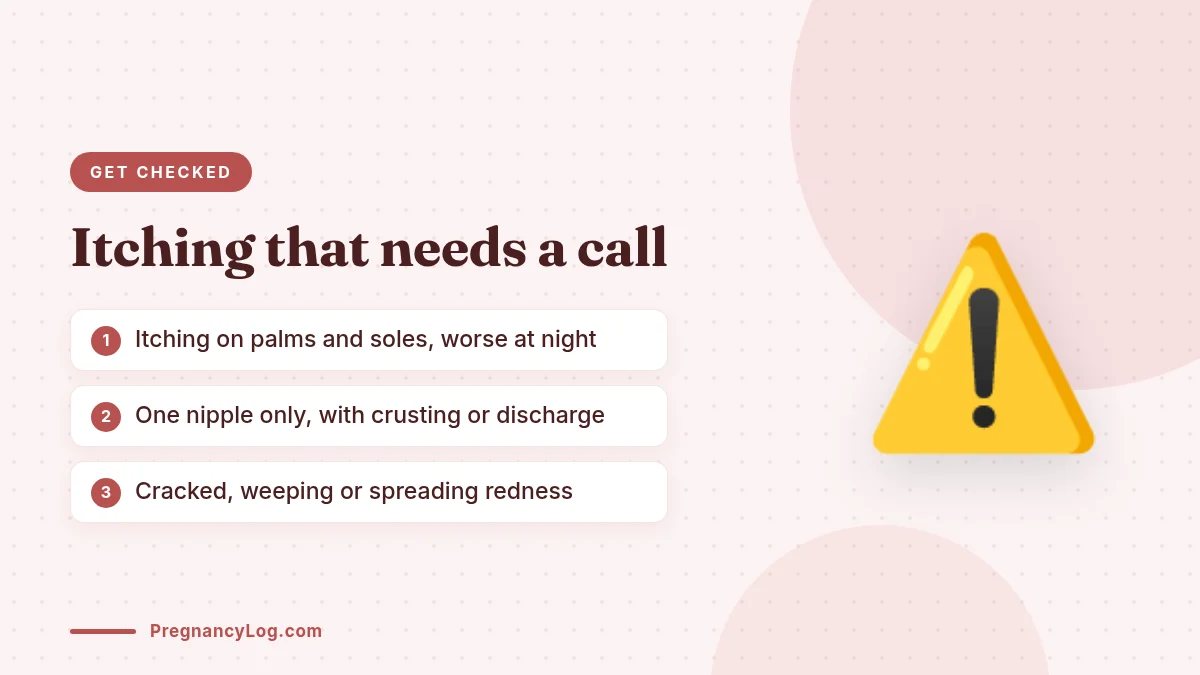
Contact your midwife or doctor the same day if:
- Itching involves your palms and soles, is worse at night, or covers your whole body this pattern suggests intrahepatic cholestasis of pregnancy and needs bile acid and liver blood tests
- You also have dark urine, pale stools, yellowing of the eyes or skin, nausea or loss of appetite
- The skin is cracked, bleeding, weeping or spreading redness, or you feel feverish possible infection
Book a routine appointment (within a week or two) if:
- Only one nipple is affected, especially with crusting, scaling, flattening or bloody or clear discharge. This is rarely, but occasionally, Paget’s disease of the nipple and deserves an examination rather than a wait-and-see
- You feel a new lump — breast lumps still need assessing in pregnancy
- The itch has not improved after 1–2 weeks of good moisturising and bra changes
- You suspect thrush, so you can get the right antifungal rather than guessing
Nothing on this list is common, and nipple itching is overwhelmingly benign. But the cholestasis pattern in particular is one of the few pregnancy symptoms where speed genuinely matters, so err on the side of the phone call.
Itchy Nipples by Trimester (and After Birth)
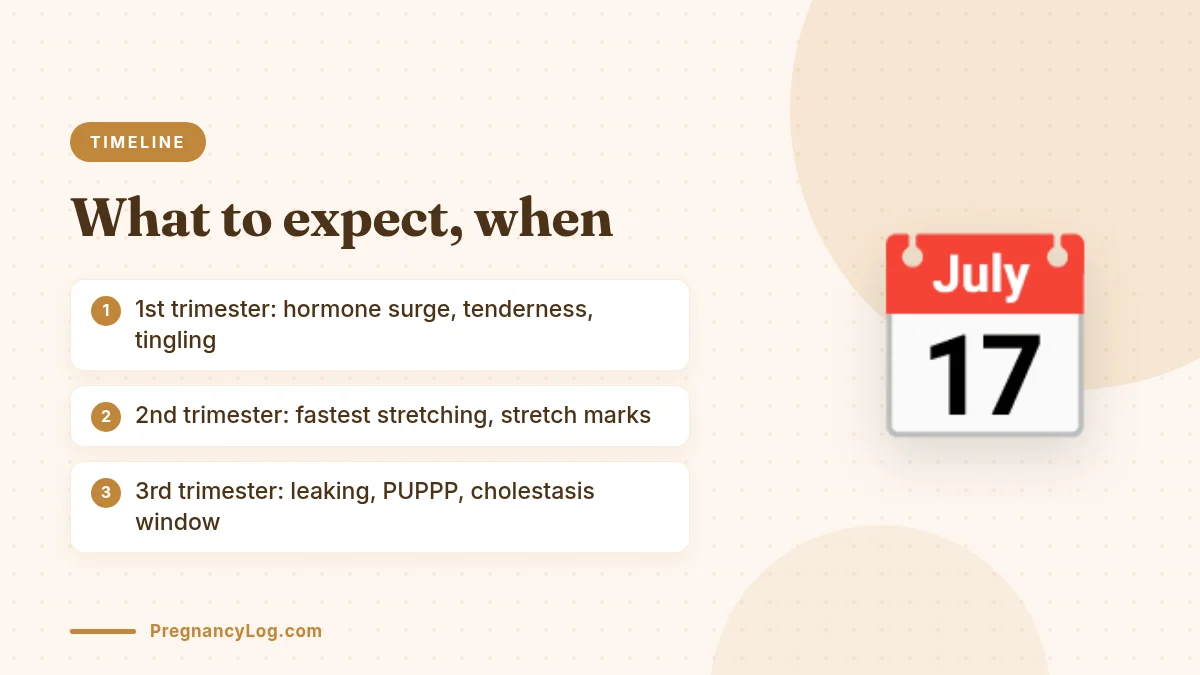
First trimester
Tenderness, tingling and itching driven almost entirely by hormones. Breasts may feel full and heavy before any visible growth. Many people notice this alongside other very early symptoms — see when pregnancy cravings start for the wider timeline.
Second trimester
Peak stretching. Areolas darken, Montgomery glands become prominent, stretch marks can appear on the sides of the breasts. This is the classic window for dry, itchy nipples, and when a proper bra refit helps most.
Third trimester
Colostrum leakage begins for many, so irritation from damp pads and dried colostrum is common. This is also the window when PUPPP and cholestasis appear, so new or severe itching in the last trimester deserves more attention than the same symptom at 14 weeks.
After birth and breastfeeding
Early breastfeeding brings a different kind of soreness — usually from latch rather than dryness. Persistent shiny, burning, itchy nipples while feeding often mean thrush and are very treatable. Lanolin, correct latch support and letting nipples air-dry cover most of it; MedlinePlus has a good overview of normal breastfeeding changes. If your cycle has not returned yet, our guide to when your period returns after pregnancy explains the timeline.
Frequently Asked Questions
Are itchy nipples an early sign of pregnancy?
They can be one of the earliest changes, sometimes appearing before a missed period, because breast tissue responds to rising hormones within days of implantation. But itching alone proves nothing — PMS, a new bra or dry weather cause the same thing. Test if your period is late, and see our guide to a faint line on a pregnancy test if the result is hard to read.
What cream is safe for itchy nipples during pregnancy?
Plain fragrance-free emollients and pure lanolin are the safest first choices and can be used as often as you like. Ask a pharmacist before using anything medicated, and avoid retinoids, strong salicylic acid and unapproved steroid creams. If you need a steroid or antifungal, your clinician can prescribe a pregnancy-appropriate option.
Does itching mean my milk is coming in?
Not directly. Milk ducts do develop throughout pregnancy and colostrum can leak from the second trimester, which irritates the skin — but itching is a skin-stretch and hormone story, not a signal about supply. Itching in pregnancy tells you nothing about how breastfeeding will go.
Why are my nipples itchy at night?
Skin loses moisture overnight, bedding traps heat, and there is less distraction, so any itch feels stronger. That said, itching that is clearly worse at night and involves palms or soles is the classic pattern of intrahepatic cholestasis of pregnancy and should be reported the same day for blood tests.
Can I scratch or exfoliate itchy nipples?
Avoid both. Scratching breaks the skin barrier and risks infection or cracking, and exfoliating the areola makes dryness worse. Press firmly, apply a cold compress or reapply emollient instead, and keep your nails short.
How long do itchy nipples last in pregnancy?
For most people it comes and goes in phases lasting days to a few weeks, usually easing once the fastest growth spurt passes and skin adjusts. With daily moisturising and a well-fitting bra, expect noticeable improvement within one to two weeks. Itching that keeps worsening, spreads or resists treatment should be assessed.
The Bottom Line
Itchy nipples during pregnancy are almost always a story about skin under pressure: stretching fast, drier than usual, rubbing against a bra that no longer fits, and reacting to products it used to tolerate. Fragrance-free emollients, a refit, lukewarm showers and gentler laundry habits solve the large majority of cases inside a fortnight.
Keep two exceptions in mind. Itching that is worse at night or involves palms and soles needs same-day blood tests for cholestasis, and one-sided nipple changes with crusting or discharge need an examination. Everything else is uncomfortable, temporary and very treatable.
Watch: Itchy Breasts: When Is It A Concern?
Watch this helpful video to learn more about itchy nipples during pregnancy.