introduction
For the complete symptom index, see the pregnancy symptoms guide.
For related symptom explainers and safe next-step guidance, browse the related pregnancy symptom guides.
Cloudy urine in pregnancy is one of those symptoms you notice by accident — you glance down before you flush and your pee looks milky, foamy or hazy instead of clear pale yellow. Most of the time it is completely harmless: concentrated urine, extra vaginal discharge or last night’s dinner can all do it. But cloudy urine is also the classic first hint of a urinary tract infection, and UTIs are treated more urgently in pregnancy than at any other time of life.
This guide walks through the nine most common reasons urine turns cloudy while you are expecting, how to tell a harmless cause from an infection, the red flags that deserve a same-day phone call, and the safe steps that usually clear things up within a day or two.
Not sure how far along you are? Our free pregnancy due date calculator gives you your due date and current week in seconds.
Is Cloudy Urine Normal During Pregnancy?
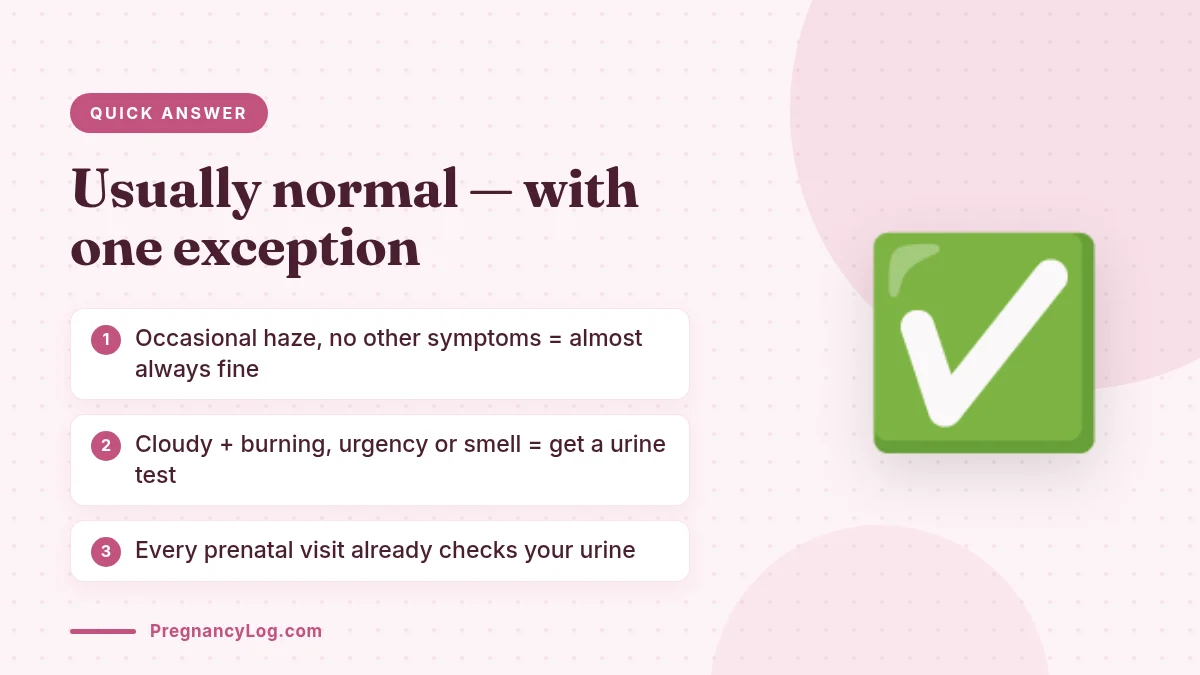
Yes — for most people, occasional cloudy urine in pregnancy is normal. Your body is making up to 50% more blood, your kidneys are filtering far more fluid, hormones are increasing vaginal discharge, and you are probably taking a prenatal vitamin. Any of those alone can change how your pee looks from hour to hour.
The useful rule is cloudiness plus company. Cloudy urine on its own, once or twice, that clears when you drink more water is rarely a problem. Cloudy urine plus burning, urgency, low back or side pain, fever, or a strong fishy or ammonia smell points towards infection and needs a urine sample checked.
Your midwife or doctor already tests your urine at most prenatal appointments precisely because bladder and kidney infections can be silent in pregnancy. If cloudy pee is your only symptom, mentioning it at your next visit is usually enough.
9 Common Causes of Cloudy Urine in Pregnancy
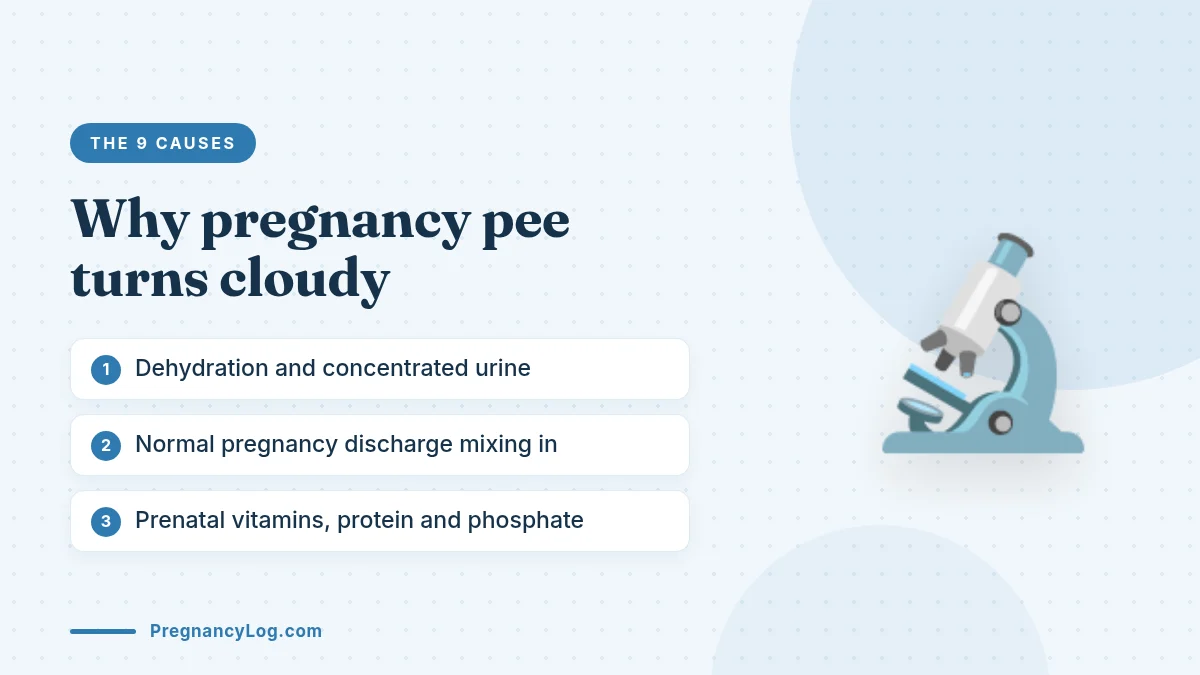
1. Dehydration and concentrated urine
The single most common cause. Less fluid means the same waste products are dissolved in less water, so urine looks darker, stronger-smelling and hazy. Morning urine is the most concentrated of the day, which is why cloudy pee is often a first-thing-in-the-morning observation.
2. Normal pregnancy discharge
Rising oestrogen increases thin, milky-white discharge (leukorrhoea) from early pregnancy onwards. It mixes with urine in the toilet bowl and makes it look cloudy or streaky. This is harmless as long as the discharge is not green, grey, itchy or foul-smelling.
3. Prenatal vitamins and supplements
Your body excretes what it cannot use. Extra B vitamins, calcium and iron change urine colour and can make it cloudy or bright, especially within a few hours of your tablet.
4. A urinary tract infection (UTI)
White blood cells, bacteria and pus cells make urine visibly cloudy. Pregnancy relaxes and compresses the urinary tract, so UTIs are more common and more likely to travel up to the kidneys. The American College of Obstetricians and Gynecologists recommends prompt treatment in pregnancy even when symptoms are mild.
5. Bacterial vaginosis or a yeast infection
Both change discharge, and both are more common in pregnancy. Bacterial vaginosis classically causes a thin grey discharge with a fishy smell; thrush causes thick white discharge with itching. Either can cloud the toilet bowl.
6. Protein in the urine (proteinuria)
Small amounts are normal in pregnancy. Larger amounts, especially after 20 weeks and combined with rising blood pressure, headaches, swelling or visual changes, can be a sign of pre-eclampsia — the reason your urine is dipped at every visit.
7. Phosphate crystals and diet
A meal high in dairy, red meat or oxalate-rich foods (spinach, beetroot, nuts) can produce a temporary white haze from phosphate or oxalate crystals. It usually disappears by your next pee.
8. Kidney stones
Stones make urine cloudy or gritty and cause severe, wave-like pain in the side or back that may spread to the groin, sometimes with blood in the urine. Pregnancy raises the risk slightly because urine flow slows.
9. Sexually transmitted infections
Chlamydia and gonorrhoea can cause cloudy urine, discomfort when peeing and unusual discharge, sometimes with no symptoms at all. Both are screened for in many prenatal programmes and both are treatable in pregnancy.
If nausea and vomiting are making it hard to keep fluids down, cloudy urine is often the first visible sign. Our guides on vomiting blood during pregnancy and bleeding while vomiting during pregnancy explain when severe sickness needs urgent review.
Cloudy Urine and UTIs: Why Pregnancy Changes the Rules

Outside pregnancy, a mild bladder infection with no symptoms is often left alone. In pregnancy it is not. Hormones relax the ureters, the growing uterus presses on the bladder, and urine sits still for longer — so bacteria have time to multiply and climb towards the kidneys. Untreated infection raises the risk of kidney infection (pyelonephritis), preterm labour and low birth weight, which is why NIDDK and national guidelines recommend treating even asymptomatic bacteriuria in pregnant patients.
Signs a UTI is behind your cloudy urine:
- Burning or stinging when you pee
- Needing to go constantly but passing only a little
- Strong, unpleasant or ammonia-like smell
- Pink, red or brown tinge to the urine
- Pressure or cramping low in the pelvis
- Feeling generally unwell, shivery or achy
Diagnosis is simple: a dipstick test in the clinic, usually followed by a urine culture to identify the bacteria. Treatment is a pregnancy-safe antibiotic — commonly nitrofurantoin, amoxicillin or cephalexin, chosen by trimester. Finish the whole course even once you feel better, and expect a repeat sample to confirm the infection has cleared. Read more about UTI symptoms and treatment on the NHS website.
Red Flags: When to Call Your Doctor About Cloudy Urine
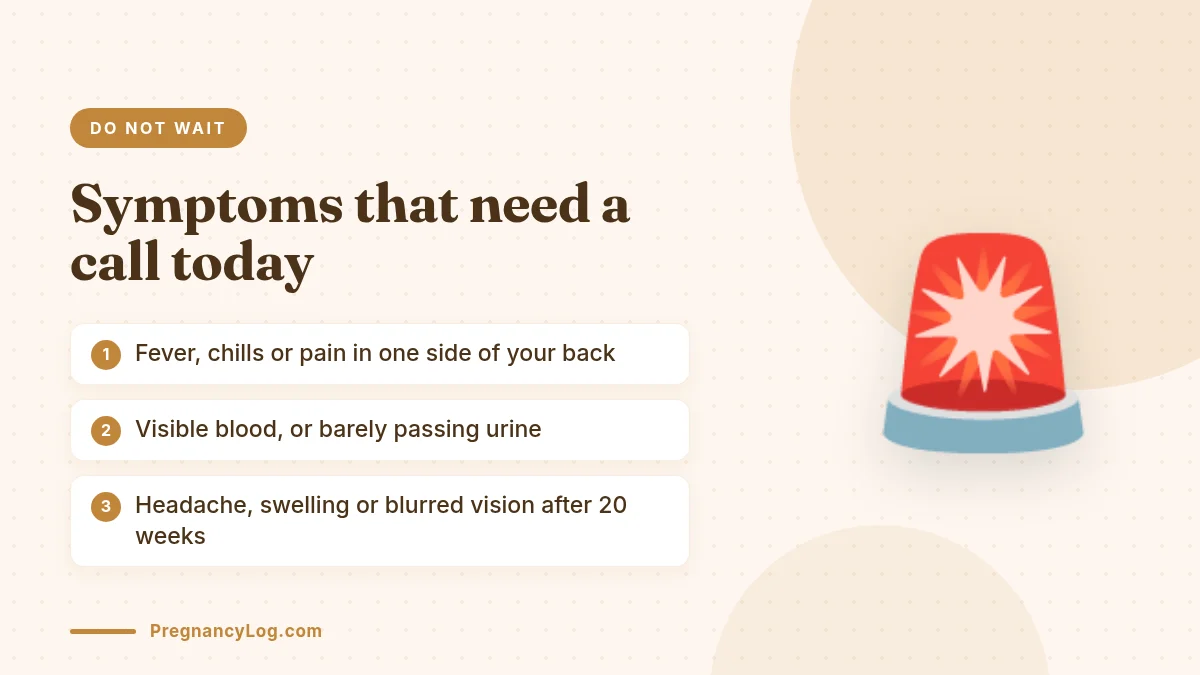
Call your midwife, obstetrician or urgent care service the same day if cloudy urine comes with any of these:
- Fever above 38°C (100.4°F), chills or shaking — suggests the infection has reached the kidneys
- Pain in one side of your lower back or flank, or pain that wraps round to the groin
- Visible blood in the urine, or urine that looks brown like cola
- Barely passing urine, or not needing to pee for many hours despite drinking
- Severe headache, blurred vision, sudden swelling of the face or hands, or pain under your ribs after 20 weeks — possible pre-eclampsia, an emergency
- Contractions, leaking fluid or reduced fetal movements alongside urinary symptoms
- Vomiting so much you cannot keep fluids down
None of these mean something is definitely wrong, but all of them are checked quickly and easily. Being assessed for a suspected UTI is one of the most routine things a maternity service does — you will not be wasting anyone’s time.
How to Clear Cloudy Urine Safely at Home

If you have no red flags, these steps fix most harmless cloudiness within a day:
- Drink steadily, not in bursts. Most pregnant people need roughly 8–12 cups (2–3 litres) of fluid a day, more in hot weather or if you are vomiting. Pale straw-coloured urine is the target.
- Take your prenatal vitamin with food. This softens the vitamin flush that clouds urine and reduces nausea.
- Empty your bladder completely. Lean forward slightly, take your time, and go again a minute later — the growing uterus makes it easy to leave urine behind.
- Pee after sex and wipe front to back to keep gut bacteria away from the urethra.
- Skip douches, scented wipes and bubble baths. They disturb the vaginal microbiome and make discharge worse, not better.
- Wear breathable cotton underwear and change out of damp swimwear or gym kit promptly.
- Watch the extremes in your diet. A very high-dairy or very high-protein day can cloud urine temporarily; balance it with water and vegetables.
- Keep caffeine moderate — under 200 mg a day is the usual pregnancy limit, and caffeine irritates the bladder. If you are swapping in herbal alternatives, check our guide to whether pregnancy tea is safe first.
Cranberry products are often suggested. Evidence that they prevent recurrent UTIs is weak, they do not treat an existing infection, and unsweetened juice is high in oxalate — so treat them as optional, not as a substitute for antibiotics. Never take leftover antibiotics or a partner’s prescription in pregnancy. If cloudiness has not improved after 48 hours of good hydration, get a urine sample checked rather than waiting it out. Curious what else is normal early on? See when pregnancy cravings start for the wider symptom timeline.
Frequently Asked Questions
Is cloudy urine an early sign of pregnancy?
It is not a reliable one. Cloudy urine in early pregnancy usually comes from increased discharge, dehydration from morning sickness or prenatal vitamins rather than from hCG itself. Plenty of people have cloudy urine with no pregnancy, and plenty have crystal-clear urine while pregnant. Only a pregnancy test can tell you — see our guide to a faint line on a pregnancy test if your result is unclear.
What is the difference between cloudy urine and foamy urine?
Cloudy urine looks hazy or milky all the way through. Foamy urine has bubbles that sit on the surface and take a while to disappear, which can mean a fast stream, a very full bladder — or protein in the urine. Persistent foam after 20 weeks is worth mentioning, because it can be an early clue to pre-eclampsia.
Can a UTI hurt my baby?
A treated bladder infection very rarely harms a baby. Untreated infection is the problem: it can spread to the kidneys and has been linked to preterm labour and low birth weight. That is why pregnant patients are treated even when they feel fine, and why a repeat urine test is done afterwards to confirm the infection has cleared.
Why is my urine cloudy in the third trimester?
Three reasons dominate late on: the baby’s head presses on your bladder so it never empties fully, discharge peaks in the last weeks, and you dehydrate faster. Late pregnancy is also when pre-eclampsia appears, so any cloudy or foamy urine with swelling, headache or high blood pressure should be checked the same day.
Do prenatal vitamins make urine cloudy?
Often, yes. Water-soluble vitamins your body does not need are filtered straight into the urine, which can look cloudy, bright yellow or strong-smelling for a few hours after your tablet. Taking the vitamin with a meal and plenty of water usually fixes it.
How long should I wait before seeing a doctor about cloudy urine?
If cloudy urine is your only symptom, mention it at your next prenatal visit or after about 48 hours of good hydration if it has not cleared. If you have burning, urgency, smell, fever, side pain or blood, book a same-day urine test instead of waiting.
The Bottom Line
Cloudy urine in pregnancy is usually a hydration story, not an emergency. Concentrated pee, normal discharge and prenatal vitamins explain the vast majority of cases, and a couple of extra glasses of water often settles it within a day.
What matters is the company it keeps. Cloudy urine with burning, urgency, odour, fever, side pain, blood or late-pregnancy swelling deserves a same-day urine test, because UTIs are treated more assertively in pregnancy for good reason. Trust the pattern: alone and occasional is fine, clustered with other symptoms is worth a phone call.
Watch: Cloudy Urine in Pregnancy: When to Worry and When Not To
Watch this helpful video to learn more about cloudy urine in pregnancy.