
Pregnancy scrubs pants are the one piece of kit that decides whether your shift feels fine or feels endless. A normal waistband starts to dig in around 14 to 20 weeks. You tug at it all day, it rolls down when you bend, and by hour eight your back is aching. Proper maternity scrub pants fix that with a stretch panel that moves with your bump instead of fighting it.
This guide keeps it simple. You will learn what makes a scrub pant a maternity scrub pant, how over-bump and under-bump panels differ, which brands are worth the money, how to size correctly, and what to wear in each trimester. There are also cheap options if you only need a few more months of wear.
What Are Pregnancy Scrubs Pants?
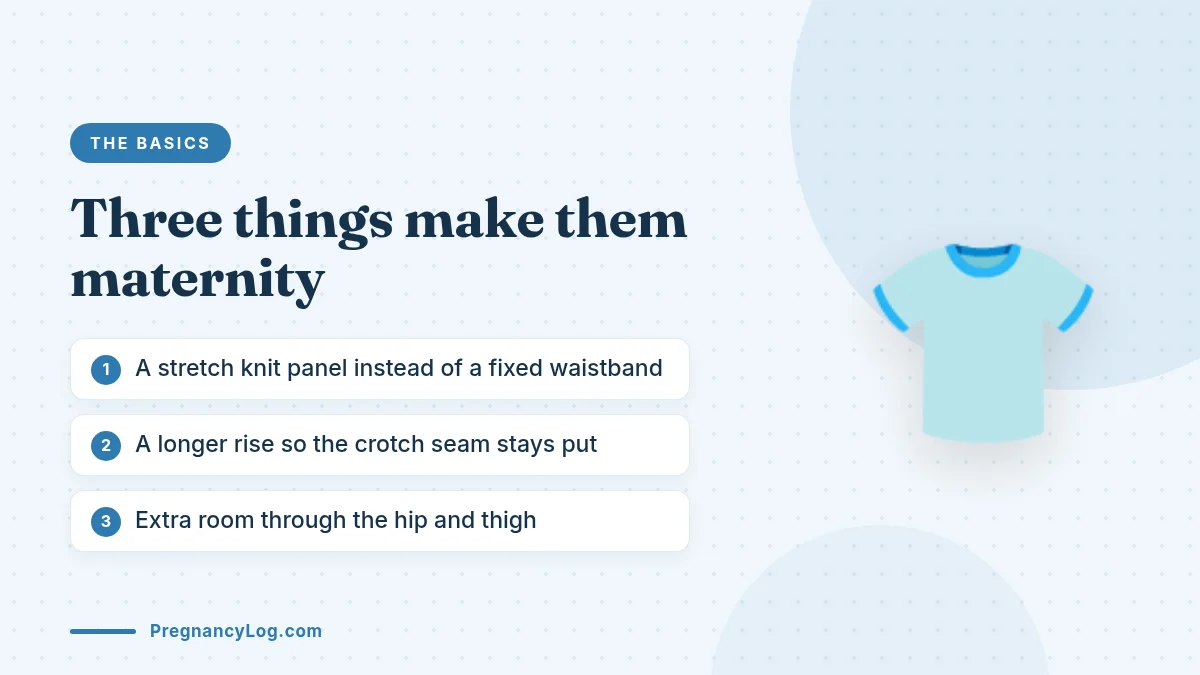
They look like normal scrubs from the front. The difference is in the waist and the rise.
- A knit stretch panel replaces the drawstring or elastic waistband. It stretches as your bump grows and pulls back in afterwards.
- A longer rise. This is the distance from the crotch seam to the waist. Maternity pants add several inches so the seam does not get dragged forward as your belly grows.
- More room in the hip and thigh, because you carry weight there too.
That longer rise is the part people miss. You can add a belly band to normal scrubs and get away with it for a while. What you cannot fake is the rise. Once your bump pulls the crotch seam down, squatting, kneeling and stair-climbing all become uncomfortable.
Most big scrub brands label these as maternity scrub pants or maternity pant. Some also sell a “maternity rise” in a regular style. Both mean the same thing.
Over-Bump vs Under-Bump Panels: Which Should You Choose?
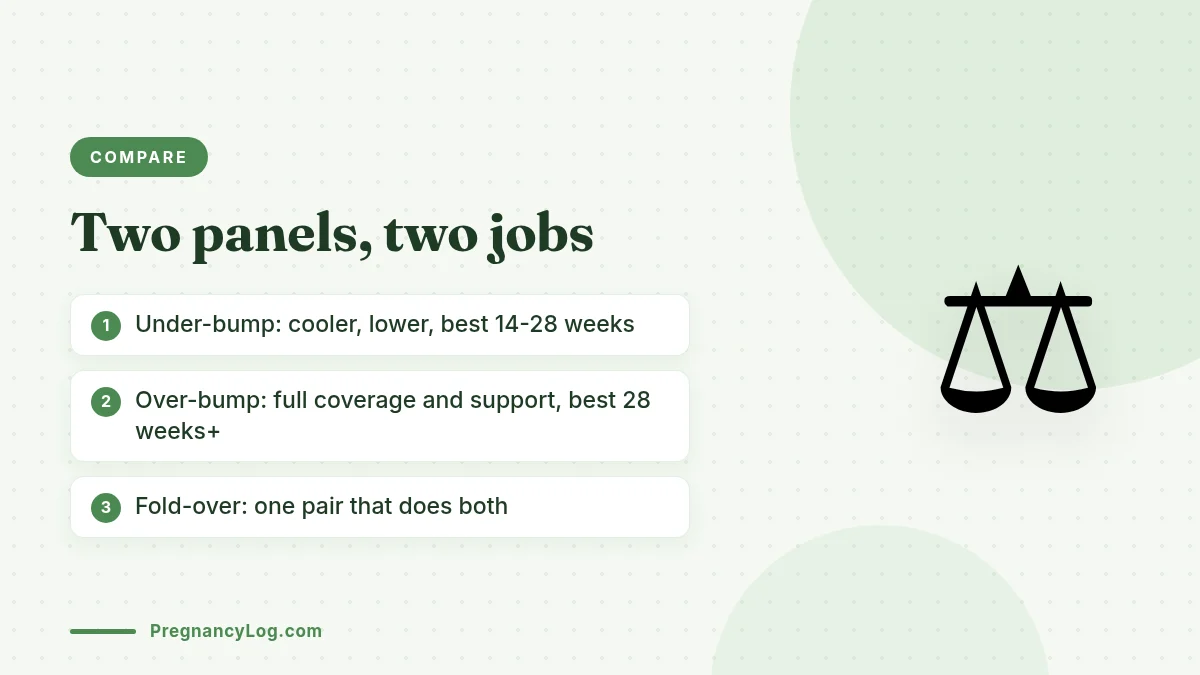
Under-bump panels
These sit below your belly, like a low-rise legging. They feel cooler and lighter. Nurses on warm wards often prefer them. They are great from about 14 to 28 weeks. Later on they can slip down when you move a lot.
Over-bump panels
These come up over your whole bump. They hold everything in place and stop the “keep hitching them up” problem. They give more support to your lower back. Most people move to over-bump from around 28 weeks. The downside is heat, so look for a thin, breathable knit.
Fold-over panels
These can be worn up or rolled down. One pair, two options. They are handy if you only want to buy two pairs. The trade-off is a slightly thicker band at the waist.
| Panel style | Best weeks | Pros | Watch out for |
|---|---|---|---|
| Under-bump | 14–28 | Cool, light, discreet | Slides down late on |
| Over-bump | 26–40+ | Support, stays put | Can feel warm |
| Fold-over | 14–40+ | Two looks in one | Bulkier waist |
| Belly band + normal scrubs | 14–24 | Cheapest option | Rise is too short later |
If you can only buy one pair, pick over-bump in a light fabric. It works for the longest stretch of your pregnancy.
Best Brands for Maternity Scrub Pants
You do not need a brand loyalty card. You need a panel you like and a colour your unit allows. That said, these are the names that come up again and again:
- Cherokee Workwear. The budget workhorse. Straight-leg maternity pants, wide colour range, easy to find in most uniform shops.
- Dickies. Similar price point, tougher fabric, plenty of pockets.
- Grey’s Anatomy by Barco. The Lilah and Promise maternity pants are popular for their soft knit waistbands and moisture-wicking fabric.
- Med Couture. Long-running maternity pant with a comfortable panel and a flattering leg.
- Jaanuu. More tailored, four-way stretch, higher price.
- Mandala and Wink. Newer, very stretchy, popular on nursing forums. Some people find Mandala maternity pants run loose, so check reviews on sizing.
- Landau and Healing Hands. Solid, plain and widely stocked by hospital uniform suppliers.
Two practical points. First, check your employer’s colour code before you buy anything. Second, ask your uniform office whether they supply maternity scrubs. Many employers do, and some are required to make reasonable adjustments for pregnant staff. In the United States the Pregnant Workers Fairness Act covers changes like uniform swaps, seating and extra breaks.
How to Get the Size and Fit Right
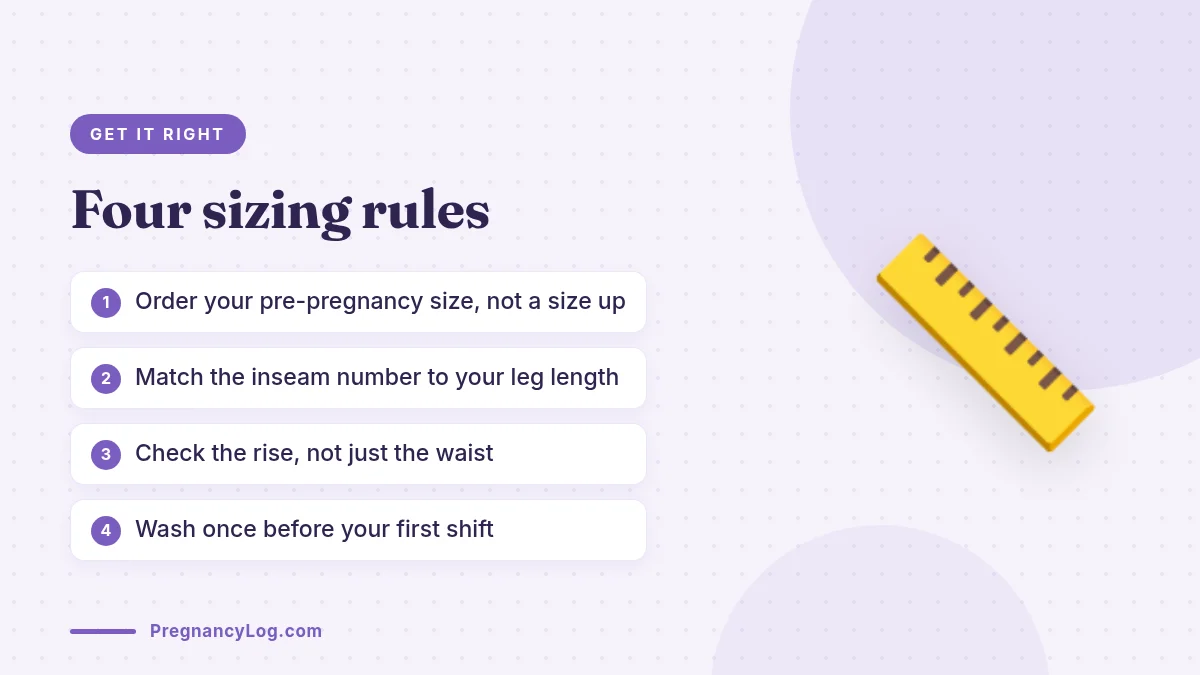
Sizing maternity scrubs feels risky. It is not, if you follow four rules.
- Order your pre-pregnancy size. The bump room is already built in. Sizing up is the single most common mistake and leaves you with baggy legs.
- Check the inseam in inches. “Regular” means about 31 inches on most brands. Petite is roughly 28 to 29, tall is 33 or more. If you are under 5 foot 4, order petite or plan to hem.
- Look at the rise. If a product page does not say “maternity rise”, it may just be a wider waistband on a normal pant. That will not last past 30 weeks.
- Wash before you wear. Some knit panels relax after the first wash. Better to find that out at home than at 3am.
What “good fit” feels like
- The panel is snug but leaves no red mark when you take the pants off.
- You can do a full deep squat without the crotch seam pulling.
- The hem clears the floor when you wear your work shoes.
- Nothing needs adjusting after you climb a flight of stairs.
If two out of four fail, return them. You will not “get used to it” over a 12-hour shift.
Fabric, Pockets and Features That Matter on Shift
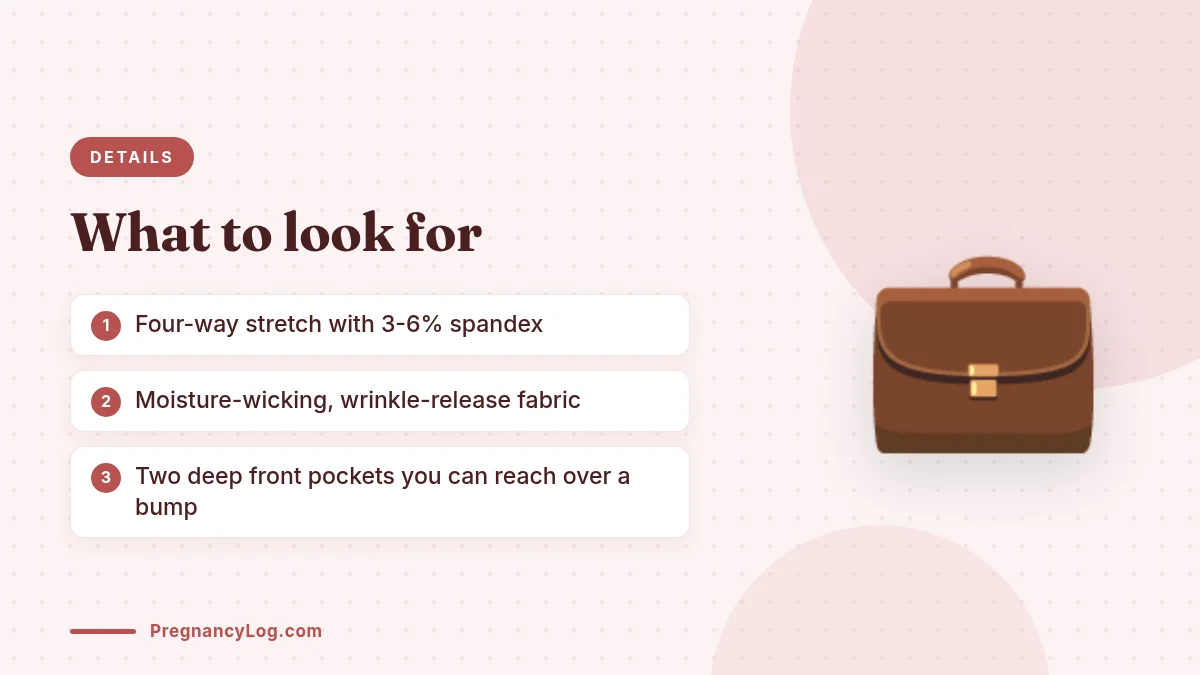
- Four-way stretch. Look for 3 to 6 percent spandex or elastane. Two-way stretch feels stiff when you squat.
- Moisture-wicking. Polyester and rayon blends pull sweat away. Pure cotton holds it.
- Breathable and light. Heavy twill is miserable over a bump in summer.
- Wrinkle release. Saves you ironing on your day off.
- Pockets you can actually reach. Cargo pockets on the thigh beat low back pockets once your bump blocks your view.
- A flat, wide panel edge. Thin elastic bands roll and cut in.
Skip anything described as “compression” at the waist. You want support, not squeeze. And if your ankles swell by the end of a shift, that is common in pregnancy; the NHS guide to swollen ankles and feet explains when it is normal and when to get checked.
What to Wear in Each Trimester
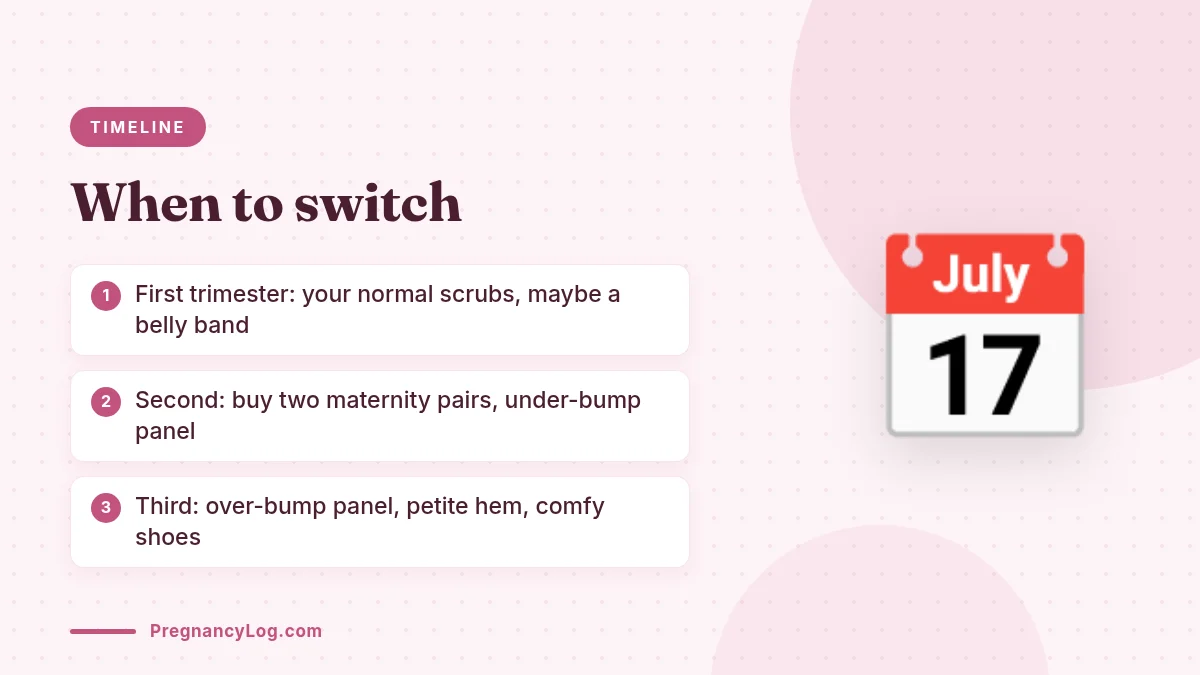
First trimester (weeks 1–13)
Most people stay in normal scrubs. Bloating is the main issue, not size. A drawstring you can loosen is usually enough. If your waistband already annoys you, try a belly band before you spend money.
Second trimester (weeks 14–27)
This is when to buy. Two pairs of under-bump or fold-over maternity pants will cover you. You will also notice your centre of gravity shifting, which is when back and hip aches often start. Simple exercises help, and so does knowing when to get proper help — our guide to physical therapy during pregnancy covers what a therapist actually does.
Third trimester (weeks 28–40+)
Switch to over-bump. Add a third pair if you work a lot of shifts. Watch your hem length, because the panel lifts the whole trouser. Swelling peaks now, so roomy, supportive shoes matter as much as the pants.
Standing for long stretches is the hard part of a clinical shift. ACOG’s guidance on employment during pregnancy explains what adjustments are reasonable to ask for, including more sitting and shorter periods on your feet.
Common Mistakes When Buying Pregnancy Scrubs Pants
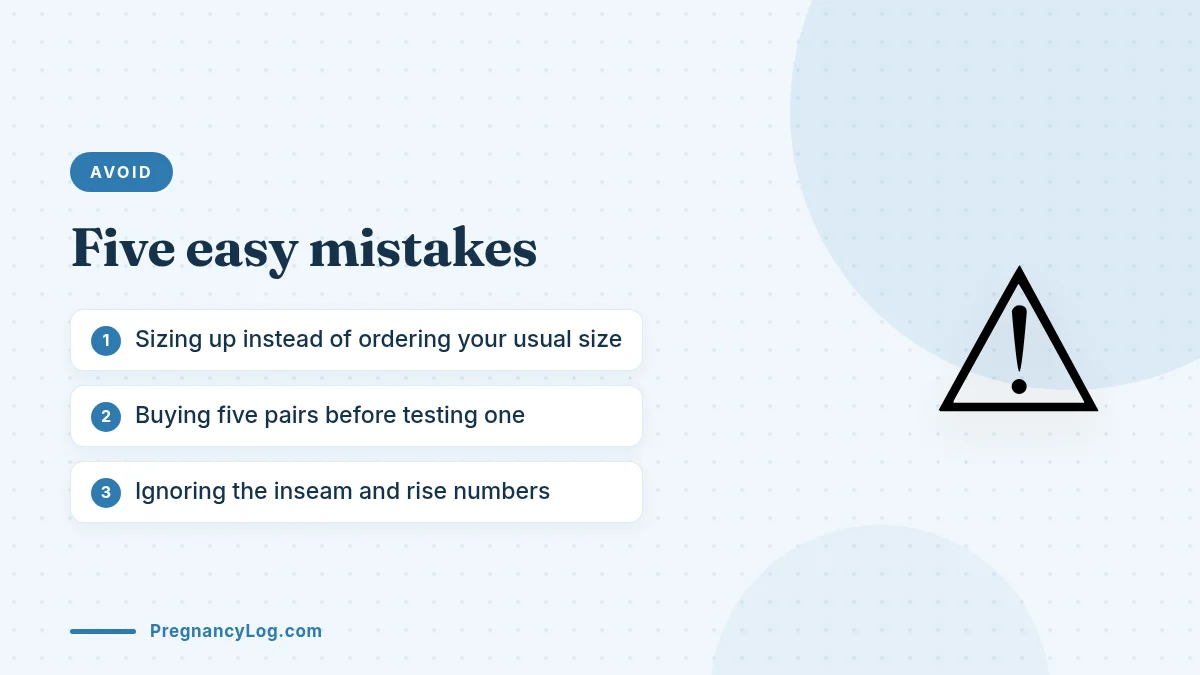
These are the errors that fill return bags.
- Sizing up. Again, do not. Bump room is already there.
- Buying a full set at once. Order one pair, wear it for a shift, then buy more. Panels feel very different between brands.
- Ignoring the inseam. A dragging hem is a trip hazard in a busy corridor.
- Choosing a “wide waistband” pant instead of a true maternity rise. It will fail around 30 weeks.
- Leaving it too late. Delivery takes a week or two, and the size you want sells out. Order at the start of the second trimester.
- Forgetting the colour code. A gorgeous pair you are not allowed to wear is money gone.
One more: do not buy pants that only fit when you stand still. Try a squat, a stair and a lunge at home before you cut the tags.
Cheaper Ways to Get Through the Bump
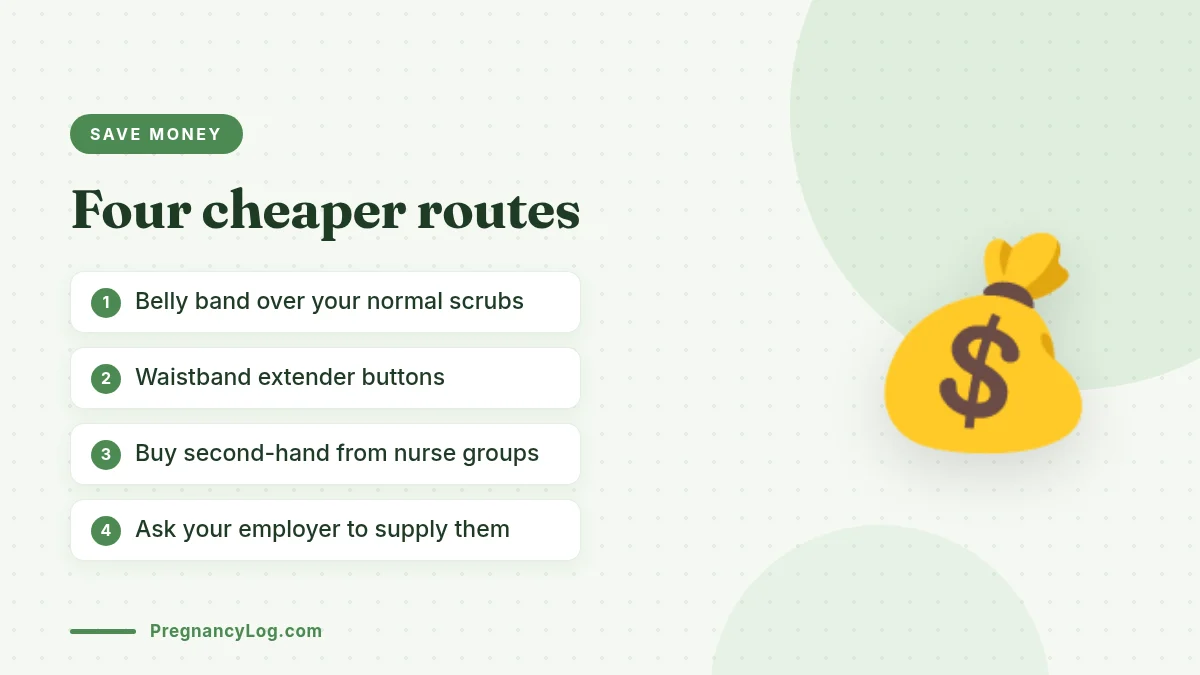
You may only need maternity pants for five or six months. There are cheaper ways through it.
- Belly bands. A wide stretchy tube that covers an unbuttoned or loosened waistband. Costs very little and buys you weeks.
- Waistband extenders. A small elastic panel that clips into the existing button. Best for scrubs with a real button, not a drawstring.
- One size up in normal scrubs plus a drawstring. Works in the second trimester if your bump is small and neat.
- Second-hand. Nurse and midwife groups on Facebook are full of barely-worn maternity scrubs at a fraction of retail. Wash on a hot cycle before wearing.
- Ask your employer. Many hospitals stock maternity uniform or will order it for you. It costs nothing to ask the uniform office.
Spend the money you save on shoes and compression socks. On a clinical shift they matter more than the label on your trousers.
Expert Tips for Surviving Long Shifts
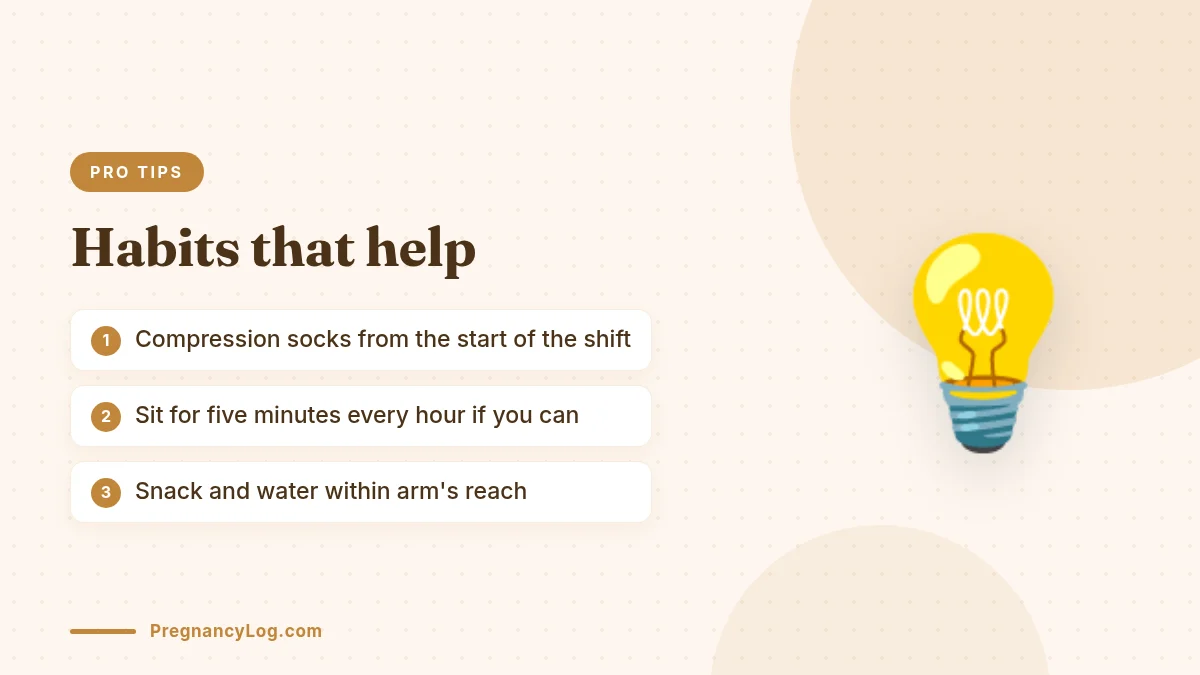
- Put compression socks on before your shift, not halfway through. They work best before swelling starts.
- Keep a spare pair of scrub pants in your locker. Spills happen, and so do leaks later in pregnancy.
- Eat little and often. Nausea and reflux both get worse on an empty stomach.
- Sit whenever you legitimately can. Ask for a stool at the desk. This is a normal adjustment, not a favour.
- Keep moving between tasks. Standing still is harder on your legs than walking. Gentle activity is safe in most pregnancies, as ACOG’s exercise guidance explains.
- Do not push through real pain. If your back, hip or pelvis hurts on shift, get assessed. Our guides to sciatica pain in pregnancy and tailbone pain during pregnancy explain what helps and what does not.
- Build a little strength off shift. Ten minutes on a birth ball is enough some days; see our exercise ball pregnancy workout.
Finally, tell your manager early enough that adjustments can actually be made. The Office on Women’s Health guide to staying healthy at work is a useful thing to bring to that conversation.
Frequently Asked Questions
When should I start wearing pregnancy scrubs pants?
Most people switch between 14 and 20 weeks. You will know it is time when your normal waistband digs in, rolls down or leaves a mark. Some nurses go up one size in regular scrubs first, then move to true maternity scrub pants in the second trimester. If your job means a lot of bending and lifting, switching early is kinder to your back.
Should I size up in maternity scrub pants?
No. Buy your normal pre-pregnancy size. Maternity scrub pants are already cut with extra room for your bump, so sizing up usually leaves the hips and legs baggy and the panel loose. Only size up if you have gone up a full size in your hips or thighs, not because of your belly.
Are over-bump or under-bump scrub pants better?
It depends on the trimester and on you. Under-bump pants sit low and feel cooler, which many people prefer early on and in hot units. Over-bump panels cover the whole belly and give more support later, so they are the usual choice from about 28 weeks. Many nurses own both and pick by shift.
Can I just use a belly band with my normal scrubs?
Yes, for a while. A belly band or a waistband extender can buy you four to eight weeks in the second trimester and costs far less than new scrubs. It stops working well once your bump pushes the crotch seam down, because the rise becomes too short and the trousers pull when you squat or climb stairs.
How many pairs of pregnancy scrubs pants do I need?
Two to three pairs is enough for most rotas. Two lets you wash one and wear one; a third helps if you work four or more shifts a week. Buy two first, wear them for a couple of weeks, and only add more once you know which fit and panel style you actually like.
Will my hospital let me wear maternity scrubs in a different colour or brand?
Usually yes, as long as the colour matches your department’s code. Many trusts and hospitals allow a different brand when the approved one has no maternity version. Ask your manager or uniform office early and get it in writing, because some employers will order or pay for maternity uniforms.
How do I stop my scrub pants dragging on the floor as my bump grows?
An over-bump panel lifts the whole trouser, so the hem often rises. Under-bump pants do the opposite and can drag. Buy a petite or short inseam if you are under 5 foot 4, and check the inseam number on the size chart rather than trusting the word regular. A quick hem is cheap and stops trip hazards on shift.
Do pregnancy scrubs pants help with back and pelvic pain?
A supportive panel can take a little pressure off your lower back, but clothing is not a treatment. If you get real back, hip or pelvic pain on shift, see a physiotherapist. Targeted exercises and small changes to how you stand and lift do far more than a waistband ever will.
The Bottom Line
Good pregnancy scrubs pants come down to three things: a panel you like, your normal size, and the right inseam. Start with under-bump or fold-over pants in the second trimester, move to over-bump around 28 weeks, and buy two pairs before you buy five.
If money is tight, a belly band and a hot-wash second-hand pair will get you a long way. And remember that clothing only fixes clothing problems. If your back, hips or legs hurt on shift, ask for adjustments and get proper help early.
Key points
- Order your pre-pregnancy size — bump room is already built in.
- Under-bump for weeks 14–28, over-bump from about 28 weeks.
- Check the inseam number, not the word “regular”.
- Buy two pairs first, then decide.
- Ask your employer about maternity uniform before you pay for it yourself.
Watch: The Complete Maternity Style Guide – Tips For Every Trimester
Watch this helpful video to learn more about pregnancy scrubs pants.