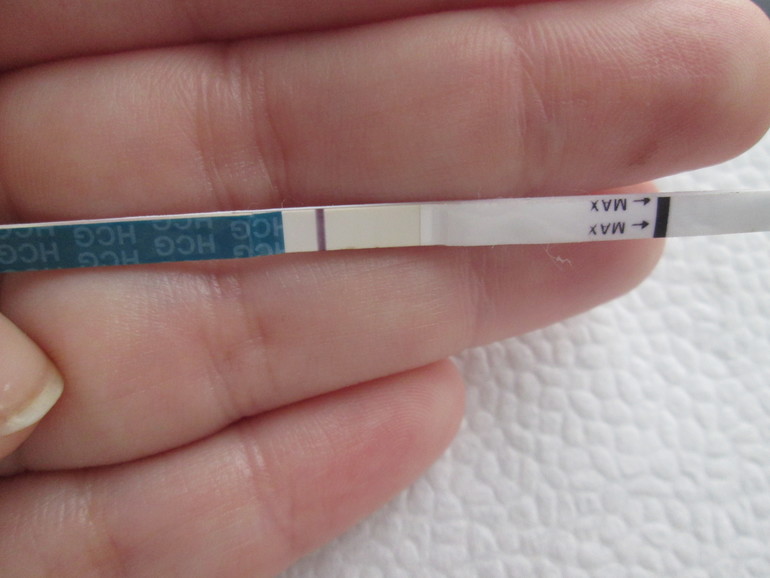
Six days after ovulation, your mind starts running through every twinge and every “what if.” A box of pregnancy tests sits in the bathroom cabinet, and part of you wants to rip one open right now. This is exactly where a 6 DPO pregnancy test question comes from and it’s one of the most searched topics among people trying to conceive.
The honest answer isn’t the one most people hope for. At 6 DPO, your body is usually still working through the early steps of pregnancy, long before a test could pick anything up. Testing now, before your body is ready, often leads to a result that doesn’t tell you much at all and that can be stressful on its own.
Below, you’ll find a clear breakdown of what’s actually happening inside your body at this stage, why a test might not show anything yet, which symptoms are worth paying attention to, and how to time your next test so you get an answer you can trust.
Why This Question Comes Up So Often
For the complete testing sequence, see the pregnancy test guide before choosing another test.
For more timing, result, and retesting guidance, browse the Pregnancy Tests hub.
Waiting to find out if you’re pregnant is one of the hardest parts of trying to conceive. Every cramp, every wave of tiredness, feels like a clue. It’s completely normal to want an answer as soon as possible.
But here’s the thing: home pregnancy tests don’t detect pregnancy itself. They detect a hormone called human chorionic gonadotropin (hCG), and your body doesn’t start producing meaningful amounts of it until a specific step happens implantation. Understanding that timeline changes how you think about testing early.
What Happens in Your Body Around Day 6
“DPO” stands for days past ovulation. Counting this way, instead of from your last period, gives a more precise picture of what stage your body is really in.
Here’s a simple rundown of the timeline:
- Fertilization (Day 0–1): If sperm meets egg, it usually happens within a day of ovulation.
- The journey (Day 1–6): The fertilized egg slowly makes its way toward the uterus.
- Implantation (Day 8–10): This is when the egg settles into the uterine lining sometimes a bit later, occasionally earlier.
- hCG release: Once implantation happens, your body starts producing hCG, and levels roughly double every two to three days.
At 6 DPO, most people are still in the “traveling” phase. Implantation hasn’t happened yet for the majority of pregnancies at this point, which means there’s simply no hCG for a test to find no matter how sensitive it claims to be.
So, Can a Test Ever Be Positive at 6 DPO?

It’s possible, just uncommon. A small number of pregnancies implant early, and in those rare cases, a very sensitive test might catch a faint line. But for most people, testing this early only leads to a negative result one that doesn’t actually confirm anything either way.
In other words, a negative test at 6 DPO isn’t proof you’re not pregnant. It just means your body hasn’t reached the point where a test can detect it yet.
Early Symptoms People Notice And Why They’re Tricky
Around this stage, people often report things like mild cramping, sore breasts, tiredness, or a slightly different mood. It’s tempting to read into every one of these.
The problem is that progesterone rises after ovulation whether or not you’re pregnant, and it causes many of these same feelings. So a sore chest or a wave of fatigue at 6 DPO could be an early pregnancy sign — or it could simply be your normal cycle doing what it always does.
Symptoms Sometimes Reported at This Stage
- Light cramping in the lower belly
- Tender or heavier-feeling breasts
- Unusual tiredness
- Mild mood swings
- Occasional light spotting (though this is more typical around 8–10 DPO)
None of these, on their own, can confirm a pregnancy. They’re worth noting in a journal, but not worth basing a decision on.
How to Test the Smart Way, If You Choose To
If you’d rather test now than wait, there are ways to get the most useful result possible — even if the odds are still against a clear answer this early.
Steps for a More Reliable Test
- Pick a test labeled for early detection, ideally one that can pick up hCG at 10 mIU/mL or lower.
- Use your first urine of the morning, since it’s the most concentrated.
- Skip drinking large amounts of water right before testing . it dilutes your sample.
- Check the result inside the exact time window listed in the instructions, usually three to five minutes.
- Ignore any line that appears after that window closes; it may just be an evaporation line, not a real result.
- A negative result shouldn’t be treated as final plan to test again in a few days.
- A positive result deserves a follow-up test 48 hours later. A true pregnancy line should get darker, not stay the same.
Weighing the Upsides and Downsides of Testing Early
| Testing at 6 DPO | What to Expect |
|---|---|
| Possible upside | Can ease anxiety for some, and helps those on fertility treatment track patterns over cycles. |
| Likely downside | High chance of a false negative, wasted test strips, and unnecessary emotional stress. |
| Best approach | Test once for peace of mind if needed, but plan on a second, later test for a real answer. |
Why Tests Give the Wrong Answer Sometimes
Reasons for a False Negative
- Implantation simply hasn’t happened yet
- hCG levels are still too low to register
- Urine was too diluted from drinking fluids
- Testing happened at the wrong time of day
- The test itself wasn’t sensitive enough
Reasons for a False Positive
- Recent fertility medication that contains hCG, such as a trigger shot
- An early chemical pregnancy that doesn’t continue
- Reading the result after the recommended time window
- Rare hormonal conditions unrelated to pregnancy
When It’s Worth Calling a Doctor
A negative test at 6 DPO is expected and rarely a reason to worry. But you should reach out to a healthcare provider if you notice heavy bleeding, severe cramping, a positive test that suddenly turns negative, or if your cycles are irregular enough that tracking DPO feels impossible.
A blood test at a clinic can detect hCG earlier and more accurately than any home test, so it’s a good option if you need a clearer answer sooner.
Practical Tips for the Two-Week Wait
- Track ovulation with an app, an ovulation kit, or basal body temperature so your DPO count is accurate.
- Hold off testing until 10–12 DPO, or the day your period is due, for a far more trustworthy result.
- Stick with the same test brand if you’re testing more than once, so results are easier to compare.
- Keep a simple log of symptoms and test days patterns become clearer over time.
- Give yourself grace during the wait. Stress doesn’t change the outcome, but it does make the wait feel longer.
Mistakes to Avoid
- Trusting an early negative as final — it usually isn’t.
- Skipping the instructions on test sensitivity and timing.
- Reading a test late, after the result window has closed.
- Over-analyzing normal cycle symptoms as pregnancy signs.
- Comparing your timeline to someone else’s — every cycle and every pregnancy is different.
Frequently Asked Questions
Is it normal to feel nothing at all at 6 DPO?
It’s completely normal. Having no symptoms says nothing about whether you’re pregnant or not.
What’s the earliest day testing actually makes sense?
Most experts point to 10 DPO at the earliest, with the day your period is due being the most reliable time.
Can stress push ovulation later and throw off my count?
It can. Illness, travel, or high stress can delay ovulation, which shifts your real DPO count without you realizing it.
Does implantation bleeding always show up before a positive test?
Not always. Plenty of people never notice any spotting at all, and that has no bearing on whether they’re pregnant.
Are digital tests better than strip tests this early?
Not really. What matters is the hCG sensitivity level, not whether the test has a digital screen or a simple line.
Could medication cause a false positive at 6 DPO?
It could, especially fertility drugs that contain hCG, such as a trigger shot given shortly before testing.
Why do some people get positive tests earlier than others?
Implantation timing isn’t the same for everyone, and it can even vary between pregnancies for the same person.
Should I retest after a negative result at 6 DPO?
That’s a good idea. Wait a few more days and test again, ideally closer to 10–12 DPO or after a missed period.
Do irregular cycles make DPO tracking harder?
They can. Without a clear ovulation date, DPO counts become guesswork, so tools like ovulation kits help a lot.
Key Takeaways
- At 6 DPO, implantation usually hasn’t happened, so there’s little or no hCG for a test to find.
- A negative result this early doesn’t rule out pregnancy . it just means it’s too soon to tell.
- Symptoms at this stage overlap heavily with normal premenstrual signs and shouldn’t be relied on alone.
- Waiting until 10–12 DPO, or your missed period, gives a far more accurate answer.
- If you do test early, confirm any result positive or negative with a second test a few days later.
Conclusion
Wanting an answer at 6 DPO makes complete sense the wait is genuinely hard. But knowing how implantation and hCG actually work can save you from a result that only adds confusion. Your body usually just isn’t ready to show anything yet at this point.
If you can manage it, hold off a few more days before testing again. That short extra wait tends to bring a much clearer answer, and one less round of uncertainty during a time that’s already full of it.