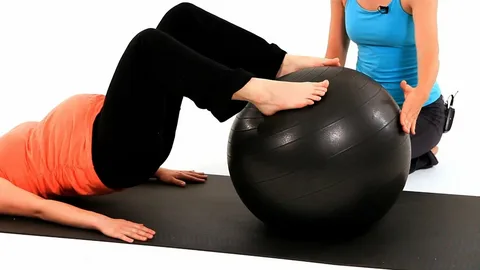
Growing a baby is hard work on your body, and finding movement that feels good gets trickier with every week. An exercise ball pregnancy workout is one of the simplest ways to stay active, ease common aches, and prepare your body for labor — no gym membership or complicated equipment required. All you need is a stability ball, a little floor space, and a plan that adapts as your belly grows.
This guide walks through why an exercise ball pregnancy workout is so effective, how to choose the right ball, safe moves for each trimester, and mistakes to steer clear of.
Why an Exercise Ball Pregnancy Workout Works So Well

Stability balls (also called birthing balls or Swiss balls) are popular in prenatal fitness for good reason. Unlike a flat mat or bench, the ball’s unstable surface forces your core and pelvic floor to engage constantly, which builds strength without straining your joints. A well-designed routine also:
- Improves posture as your center of gravity shifts forward
- Relieves lower back and hip pressure
- Encourages optimal fetal positioning in later weeks
- Strengthens the pelvic floor and glutes for labor
- Offers a low-impact way to stay active when running or jumping no longer feel comfortable
Because the ball supports your body weight while you move, it’s gentler on the joints than many standing or floor-based routines — a big plus as relaxin loosens your ligaments throughout pregnancy.
Is an Exercise Ball Pregnancy Workout Safe?
 For most healthy pregnancies, yes. The American College of Obstetricians and Gynecologists notes that moderate exercise during pregnancy is safe and beneficial for most people, and stability ball training fits well within those guidelines (ACOG). This applies broadly to prenatal stability ball routines. That said, always get personalized clearance from your OB or midwife before starting any new routine, especially if you have a high-risk pregnancy, placenta previa, or a history of preterm labor.
Warning Signs to Stop Immediately
Stop your exercise ball pregnancy workout and contact your provider if you experience dizziness, chest pain, vaginal bleeding, contractions, or fluid leakage. The Mayo Clinic recommends pausing activity anytime you feel unusually short of breath or lightheaded during pregnancy exercise (Mayo Clinic).
Modifications by Trimester
As your bump grows, your balance shifts and certain positions (especially lying flat on your back after 20 weeks) should be avoided. A good exercise ball pregnancy workout gets modified each trimester rather than staying static — what feels stable at 10 weeks may feel precarious at 30.
Choosing the Right Ball Size
Ball size matters more than most people expect. When you sit on it, your knees should sit at roughly a 90-degree angle with feet flat on the floor.
| Height | Recommended Ball Size |
| Under 5’4″ | 55 cm |
| 5’4″ – 5’11” | 65 cm |
| Over 5’11” | 75 cm |
Choose an anti-burst ball rated for at least 300 lbs, and always test it on a non-slip surface before starting your exercise ball pregnancy workout.
Exercise Ball Pregnancy Workout Moves by Trimester

First Trimester
Energy levels vary widely in the first trimester, so keep sessions short — 15 to 20 minutes is plenty.
- Seated pelvic tilts: Sit tall on the ball and rock your pelvis forward and back to warm up the lower spine.
- Seated marches: Lift one knee at a time to engage the core and improve balance.
- Wall squats with the ball: Place the ball between your lower back and a wall, then squat slowly for controlled leg strength work.
Second Trimester
This is often the most comfortable window for a more active exercise ball pregnancy workout, since morning sickness has typically eased and the belly isn’t yet at its largest.
- Hip circles: Sitting on the ball, draw slow circles with your hips in both directions to loosen the pelvis.
- Ball bridges: Lie with calves resting on the ball, lift your hips into a bridge, and lower with control (skip this once lying flat becomes uncomfortable).
- Side-lying leg lifts with ball support: Rest an arm on the ball for balance while lifting the top leg to strengthen the outer hips.
Third Trimester
Movements shift toward comfort, hip opening, and labor preparation.
- Deep squats holding the ball: Hold the ball at chest height for counterbalance while sinking into a supported squat — this is a favorite among doulas for encouraging optimal fetal positioning.
- Figure-eight hip rolls: Trace a figure eight with your hips while seated to relax the pelvic floor.
- Gentle bouncing: Small, controlled bounces while seated can ease pelvic pressure and may help early labor progress.
Common Mistakes to Avoid
- Skipping the warm-up before jumping straight into a full routine
- Holding your breath during exertion instead of breathing steadily
- Overstretching, since pregnancy hormones already loosen ligaments
- Using an underinflated or wrong-size ball, which increases fall risk
- Continuing through pain rather than modifying or stopping
FAQs
- Is it safe to use a stability ball every trimester? Yes, for most low-risk pregnancies, though the specific moves should change as your balance and belly size shift. Always confirm with your provider first.
- How often should I train with the ball each week? Most prenatal fitness experts suggest 3–4 sessions of 15–30 minutes, though this varies based on your fitness level and how you’re feeling.
- Can an exercise ball pregnancy workout help turn a breech baby? Some positions, like supported deep squats and hip circles, are commonly used to encourage optimal fetal positioning, though results vary and it isn’t a guaranteed fix.
- What size stability ball is best for pregnancy? Choose based on your height — generally 55–75 cm — so your knees form a 90-degree angle when seated.
- Can I still use the ball in the third trimester? Yes, with modifications. Focus on gentle bouncing, hip circles, and supported squats rather than higher-intensity movements.
- Does bouncing on a birthing ball induce labor? Bouncing can help encourage baby into position and may ease pelvic pressure, but there’s no strong evidence it directly induces labor.
- What movements should I avoid on the ball while pregnant? Avoid lying flat on your back after the first trimester, holding your breath, overstretching, and any move that causes pain or dizziness.
- Do I need any other equipment besides the ball? Not necessarily — a non-slip mat and supportive shoes are helpful, but the ball alone can carry a full routine.
Conclusion
A well-structured exercise ball pregnancy workout is one of the most adaptable ways to stay strong, comfortable, and prepared for labor throughout all three trimesters. Start slow, listen to your body, and adjust the moves as your pregnancy progresses. If you’d like personalized guidance, check out our prenatal fitness classes for hands-on support tailored to each stage of pregnancy.